Yakisoba Recipe (Japanese Stir-Fried Noodles) 焼きそば • Just One Cookbook
bossfight.xyz >> Uncategorized>> Yakisoba Recipe (Japanese Stir-Fried Noodles) 焼きそば • Just One Cookbook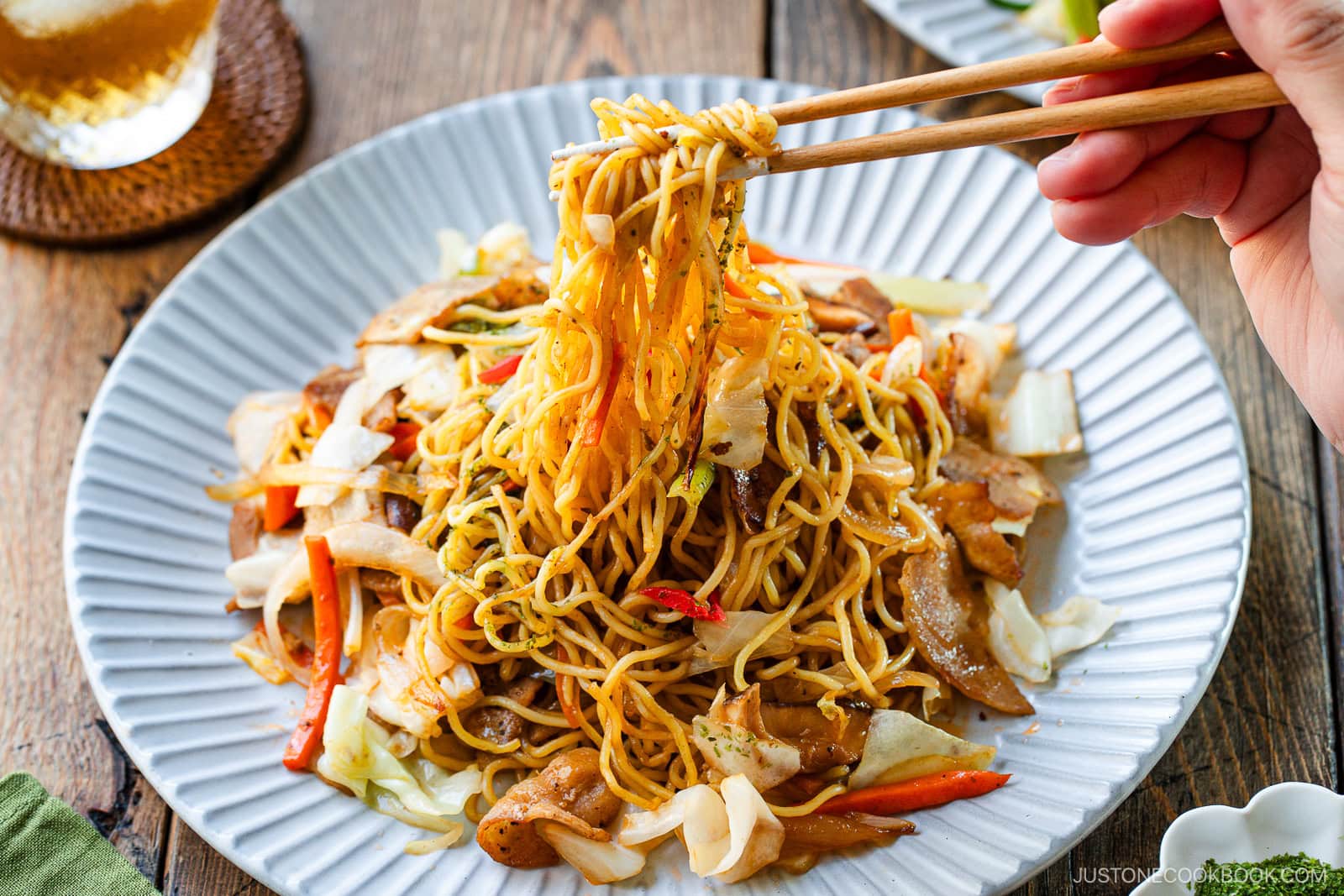
Yakisoba Recipe (Japanese Stir-Fried Noodles) 焼きそば • Just One Cookbook

Recipe Highlights
Yakisoba (Japanese Stir-Fried Noodles) is one dish I grew up eating again and again for weekend lunches because it was my dad’s favorite. My mom and I prepped the ingredients, and everyone gathered around the griddle to cook together. It’s flexible and deeply comforting, which is why I still make it often for my family.
Here’s why I keep coming back to this recipe:
- Quick and approachable. Fast to prep and ready to eat in 30 minutes.
- Classic street-food flavor. A hot griddle and savory sauce make all the difference.
- Customizable. Use pork, chicken, shrimp, calamari, tofu, or mushrooms.
If you enjoy easy Japanese noodle dishes, try my Yaki Udon, Miso Ramen, and Soba Noodle Salad next!

What is Yakisoba?
Yakisoba (焼きそば) is a Japanese stir-fried noodle dish made with steamed wheat-based noodles, vegetables, meat or seafood seasoned with a sweet-savory sauce.
Despite the name, it does not use buckwheat soba noodles. It evolved from Chinese chow mein brought over by Chinese immigrants during the Taisho era (1912–1926).
This beloved street food got its start in Tokyo’s Asakusa area. Today it’s a staple at festivals and a weeknight favorite in home kitchens across Japan.
Ingredients for Japanese Stir-Fried Noodles
- yakisoba noodles – Chinese-style, pre-steamed, wheat noodles; I recommend Myojo brand, available in the refrigerated section of Japanese grocery stores; For online shopping, try this vacuum-sealed option on Amazon
- proten & vegetables
- oil
- freshly ground black pepper
- yakisoba sauce – Worcestershire sauce, oyster sauce, ketchup, soy sauce, and sugar
- toppings (optional)
Find the printable recipe with measurements below.
How to Make Yakisoba
- Prep. Cut the pork and veggetables into bite-size pieces. Whisk the sauce ingredients together. Taste and adjust the sweetness to your liking.
- Warm the noodles. Heat oil in a large pan or griddle, add the noodles to the pan, and gently loose them. Transfer to a plate and set aside.
- Stir-fry. In the same pan, cook the pork until just done. Add the onion and carrot, then the cabbage and mushrooms.
- Combine and season. Return the noodles to the pan, pour in the sauce, and toss everything together until evenly coated.
- Serve. Plate immediately and top with aonori, beni shoga, and katsuobushi, if using.


Nami’s Recipe Tips
These tips will help you make this Yakisoba recipe perfectly every time.
- Use large cookware – A large skillet, griddle, pan, or wok give the noodles room to char—that’s what creates the street food flavor.
- Loosen the noodles first – Let refrigerated noodles come to room temperature, then separate them gently before cooking (if possible).
- Cook vegetables in stages – To retain the fresh texture and crunch, cook hard vegetables first and soft ones last.


- Don’t overcrowd the pan – Too many ingredients trap steam. Work in batches, if needed. You want dry and crispy, not wet and soft.
- Taste the sauce first – Adjust the sweetness and saltiness before combined. Let it sizzle at the edge of the pan before tossing—it deepens the flavor!
- Serve immediately – Yakisoba tastes best hot and crispy straight from the pan.

Variations
This recipe is flexible—here are some ideas to get you started.
- Swap the protein. Chicken thighs, shrimp, squid, sausage, ground pork, tofu, or mushrooms work well. Beef is not traditional in Japan, but feel free to try it!
- Add more vegetables. Bean sprouts or nira (Chinese chives) add great texture and fiber.
- Make it vegetarian. Skip meat, use tofu, and swap in vegetarian oyster sauce.


What to Serve with Yakisoba
Yakisoba pairs well with a range of sides any time of year.


Storage and Reheating Tips
To store: Cool to room temperature and transfer to an airtight container. Refrigerate for up to 3–4 days or freeze for up to 3 months. Thaw overnight in the refrigerator before reheating.
To reheat: For best results, reheat yakisoba in a pan over medium heat until warmed through. Add a small splash of water if noodles look dry.
FAQs
What is yakisoba made of?
Yakisoba is made with wheat-based noodles, sliced meat or seafood, vegetables like cabbage and carrots, all stir-fried over high heat in a sweet-savory yakisoba sauce. It’s typically topped with aonori (dried green seaweed) and beni shoga (red pickled ginger).
Is yakisoba made with soba noodles?
No. Despite the name, yakisoba doesn’t use buckwheat soba noodles. It’ uses’s made with wheat-based Chinese-style noodles called mushi chukamen. In Japanese, soba is also a general term for noodles of any type.
What sauce is used for yakisoba?
Yakisoba sauce is a blend of Worcestershire sauce, oyster sauce, ketchup, soy sauce, and sugar. The flavor is sweet, savory, and slightly tangy. You likely have most of these ingredients in your pantry already.
Can I use ramen noodles for yakisoba?
Pre-steamed ramen or Chinese-style noodles can work in a pinch, but dried ramen noodles are not ideal. Yakisoba noodles are pre-steamed, giving them the chewy texture that holds up best when stir-fried. Other noodles tend to release more moisture after boiling, so your yakisoba may turn out wetter than expected.
I’d love to hear how yours turned out! 💛 Please leave a star rating and comment below to share your experience. Your feedback not only supports Just One Cookbook but also helps other home cooks discover recipes they can trust.
Yakisoba (Japanese Stir-Fried Noodles)
For the Toppings (optional)
-
Gather all the ingredients. Freeze the pork belly slices for 10 minutes for easier slicing. Nami’s Tip: Make a double batch of the sauce. Small amounts are hard to measure precisely, and if you’re adding extra vegetables or meat, you’ll want more on hand.
To Make the Yakisoba Sauce (⅓ cup, 80 ml)
-
In a small bowl, whisk together ¼ cup Worcestershire sauce, 4 tsp oyster sauce, 4 tsp ketchup, 2 tsp soy sauce, and 2 tsp sugar until the sugar dissolves.Nami’s Tip: Taste the sauce before using—ketchup sweetness and Worcestershire sourness vary by brand, so adjust to your liking.
To Prepare the Ingredients
-
Cut the partially frozen ¾ lb sliced pork belly crosswise into 1-inch (2.5-cm) pieces.
-
Cut ½ onion into ¼-inch (6-mm) slices.
-
Cut 4 inches carrot into 2-inch slabs and thinly slice into julienne strips.
-
Remove the core from ¼ small head green cabbage. Cut the cabbage wedge into 1-inch (2.5-cm) slices.
-
Cut the cabbage slices into bite-sized pieces.
-
Chop 2 green onions/scallions into 2-inch (5-cm) pieces. Cut any thick, white parts of the green onions in half lengthwise.
-
Remove the stems from 3 shiitake mushrooms and cut the caps into ¼-inch (6-mm) slices.
To Cook the Yakisoba
-
Add the pork belly to the hot griddle, separating the clumps so the slices are in a single layer. Season with freshly ground black pepper. Nami’s Tip: If using a different protein, drizzle an additional 1 Tbsp oil onto the griddle.
-
Stir-fry until the meat is no longer pink.
-
Add the onion to the griddle and stir, separating the layers. Cook for 1–2 minutes, until tender and slightly charred.Nami’s Tip: Add vegetables in stages—hard ones first, soft ones last. This keeps their texture and crunch intact. Don’t overcrowd the pan—too many ingredients at once will steam the noodles instead of stir-frying them.
-
Add the carrots, stir, and cook for 1–2 minutes, until they are coated with oil and start to soften.
-
Add the cabbage and shiitake mushrooms and cook until they are coated with oil and begin to soften.
-
Add the green onions and cook for 1 minute until they start to wilt.
-
Spread out the protein and vegetables in the pan. Place the yakisoba noodles on top and drizzle with ⅓ cup yakisoba sauce. Toss with tongs until evenly coated. Taste and add more sauce, if needed.
-
Toss the noodles frequently to prevent sticking. Once coated in the sauce and warmed through, serve immediately on individual plates.
Variations and Customizations
- Swap the protein. Chicken thighs, shrimp, squid/calamari, sausage, ground pork, tofu, or mushrooms work well. Beef is not a typical choice in Japan, but you can try it!
- Use more vegetables. Bean sprouts or nira (Chinese chives) add crunch and fiber.
- Make it vegetarian. Skip meat and use tofu with vegetarian oyster sauce.
- Try different styles. Use this recipe as a filling for Yakisoba Pan and omusoba (yakisoba-stuffed omelette), or as a base for Hiroshima-style Okonomiyaki.
Calories: 942kcal, Carbohydrates: 53g, Protein: 20g, Fat: 72g, Saturated Fat: 30g, Trans Fat: 1g, Cholesterol: 129mg, Sodium: 569mg, Potassium: 736mg, Fiber: 4g, Sugar: 8g, Vitamin A: 3678IU, Vitamin C: 17mg, Calcium: 91mg, Iron: 3mg
Did you make this recipe?
Tag @justonecookbook on Instagram so we can see your delicious creation!
Update: The post was originally published on April 6, 2011, updated with a new video, new images on October 27, 2023, and republished with helpful content on May 3, 2026.
Related Post

Breakfast Burritos, Galbi Patty Melts, and More Dishes Chef Nyesha Arrington Tried in San Francisco
In this episode of Plateworthy, host Nyesha Arrington makes her way through some of the…